

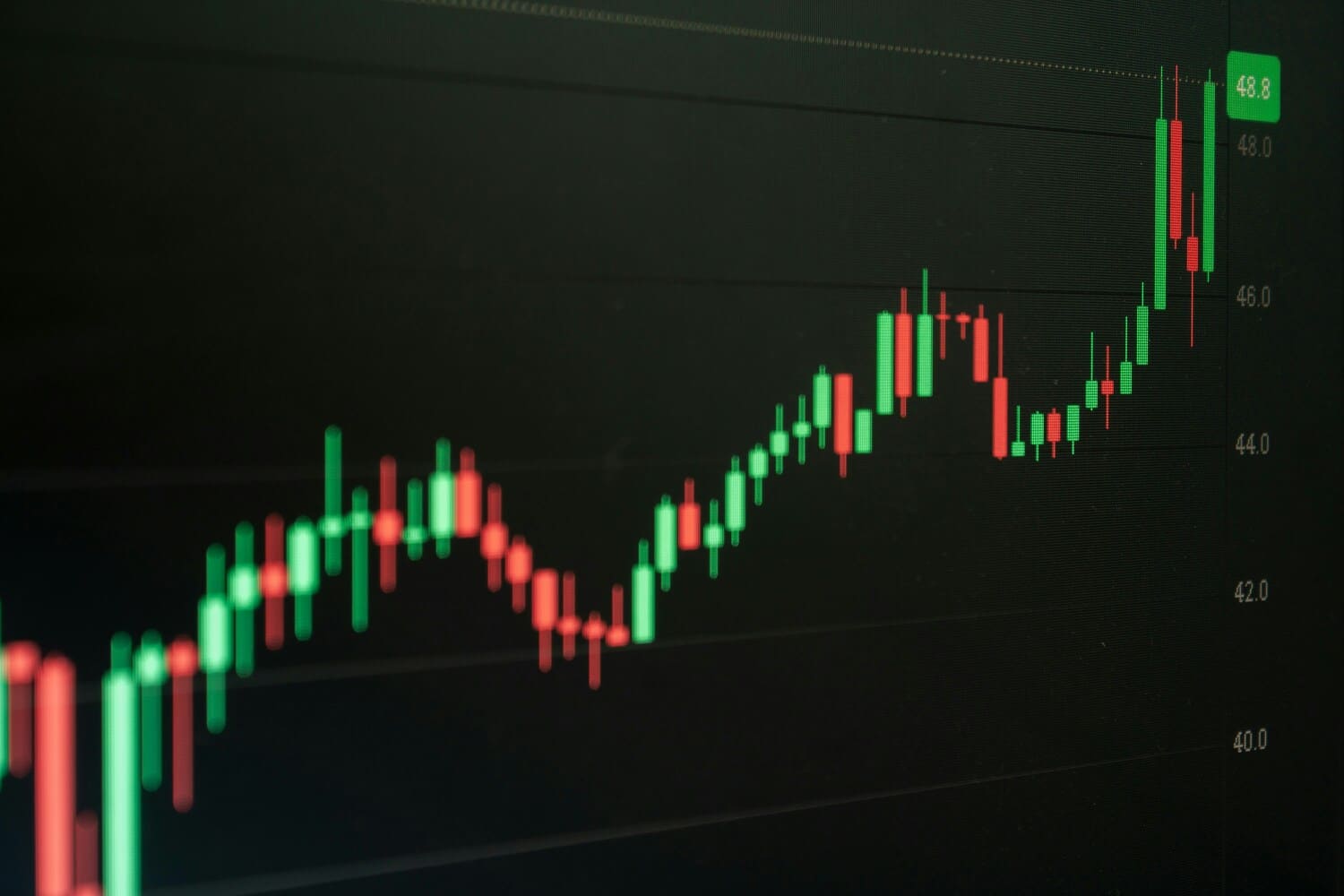
Investors often search for certainty. They want to know which asset will rise, which market will fall, and which opportunity will produce the best return. The challenge is that financial markets rarely provide certainty.
Prices move because of countless factors. Economic conditions change. Technologies evolve. Regulations shift. Human behaviour introduces additional unpredictability. Even experienced investors cannot know the future with complete accuracy.
This reality makes probability more valuable than certainty. Successful investing often depends on estimating likely outcomes rather than predicting exact results. Investors make decisions based on evidence, trends, and risk assessments while accepting that uncertainty remains.
The process resembles sailing across open water. A captain cannot control the weather or predict every wave. Instead, decisions are based on forecasts, experience, and the likelihood of different conditions. Investing operates in much the same way.
For this reason, probability has become a central concept in modern investing. It helps investors evaluate opportunities, manage risk, and make informed decisions without relying on the impossible goal of complete certainty.
Why Investors Focus On Probabilities Instead Of Predictions
Many people approach investing as a search for accurate predictions. They look for experts who can forecast market movements or identify the next major opportunity. In reality, experienced investors often focus less on prediction and more on probability.
The reason is simple. Predictions require certainty about future events. Probability acknowledges uncertainty while still providing a framework for decision-making. Investors evaluate which outcomes appear more likely rather than assuming they know exactly what will happen.
The process resembles preparing for changing weather conditions. A forecast showing a 70% chance of rain does not guarantee rain, but it provides useful information for planning. Probability serves the same purpose in investing by helping people assess risk and potential reward.
This approach encourages flexibility. When investors think in probabilities, they are less likely to become attached to a single outcome. They can adjust decisions as new information becomes available because their strategy already accounts for uncertainty.
The same principle appears in many environments where outcomes cannot be known in advance. Someone exploring a platform and completing a desi slot login, for example, understands that future results remain uncertain. Decisions are made based on likelihoods, available information, and expectations rather than guarantees. Investing follows a similar logic, although the underlying assets, time horizons, and analytical methods differ significantly.
Probability also improves risk management. Instead of asking whether an investment will succeed, investors ask how likely different outcomes are and what consequences each outcome may produce. This broader perspective often leads to more balanced decisions.
As a result, successful investors focus on probabilities because they reflect the reality of financial markets. Certainty is rarely available, but probability provides a practical way to evaluate opportunities, manage uncertainty, and make informed decisions despite an unpredictable future.
How Probability Improves Risk Management And Long-Term Results
Risk is unavoidable in investing. Every decision carries uncertainty because future outcomes cannot be known with complete confidence. Probability helps investors manage this reality by focusing attention on potential scenarios rather than single predictions.
The key advantage is perspective. Instead of viewing investments as either successes or failures, investors consider a range of possible outcomes. They evaluate both the likelihood of each outcome and the impact it could have on their portfolio.
The process resembles designing a bridge to withstand different weather conditions. Engineers do not assume perfect circumstances every day. They prepare for various possibilities because uncertainty is part of the environment. Effective investing follows the same principle.
Probability also encourages diversification. When investors acknowledge uncertainty, they become less likely to depend entirely on one idea, one asset, or one forecast. Spreading exposure across different opportunities helps reduce the effect of unexpected events.
Another benefit is emotional stability. Investors who understand probability are often less surprised by short-term fluctuations. They recognise that even well-reasoned decisions can produce unfavourable outcomes in the short run. This understanding reduces the tendency to react impulsively to every market movement.
Long-term performance often improves because probability-based thinking supports consistency. Investors focus on making decisions with favourable odds over many opportunities rather than seeking certainty in any single investment. The goal becomes improving decision quality rather than predicting every outcome correctly.
This distinction is important. A strong investment process can occasionally produce losses, just as a weak process can occasionally produce gains. Probability helps investors judge decisions based on the quality of reasoning rather than the result of a single event.
As a result, probability strengthens risk management by encouraging preparation, diversification, and disciplined decision-making. Over time, this approach often leads to more resilient strategies and better long-term outcomes in environments where uncertainty can never be fully eliminated.
Why Certainty Can Be More Dangerous Than Uncertainty
At first glance, certainty appears desirable. Investors naturally prefer clear answers and predictable outcomes. However, excessive confidence can create problems because financial markets rarely behave in completely predictable ways.
The danger emerges when certainty replaces critical thinking. Investors who believe they know exactly what will happen may ignore risks, overlook alternative scenarios, or concentrate too heavily on a single idea. Confidence becomes a weakness when it discourages preparation.
The process resembles driving through dense fog while assuming the road ahead is perfectly clear. The belief may feel reassuring, but it reduces caution at the exact moment when caution is most valuable.
Probability encourages a different mindset. It acknowledges that multiple outcomes remain possible. Investors continue evaluating information because they understand that no forecast is guaranteed. This perspective promotes flexibility and adaptability when conditions change.
Markets regularly demonstrate the limits of certainty. Unexpected economic events, technological disruptions, regulatory changes, and shifts in investor sentiment can alter conditions quickly. Strategies built on absolute confidence often struggle when reality diverges from expectations.
Probability-based thinking creates resilience because it prepares investors for uncertainty rather than denying its existence. Instead of asking, "What will happen?" investors ask, "What is most likely to happen, and how should I prepare if something different occurs?"
This approach also improves decision quality. Investors become more willing to revise assumptions when new evidence appears. Changing a view becomes a rational response to updated information rather than an admission of failure.
As a result, uncertainty is not necessarily the greatest challenge in investing. False certainty often presents a greater risk because it encourages overconfidence and reduces preparedness. Probability provides a more realistic framework by recognising that successful investing depends on managing uncertainty, not eliminating it.
Probability Provides A More Realistic Framework For Investing
Modern investing operates in an environment shaped by uncertainty. Markets respond to changing economic conditions, technological developments, political events, and human behaviour. No investor can predict every outcome with complete accuracy.
This reality makes probability more useful than certainty. Probability allows investors to evaluate opportunities without assuming they know exactly what the future will bring. Decisions become grounded in likelihoods, evidence, and risk assessment rather than absolute predictions.
Probability improves decision-making because it encourages flexibility. Investors remain open to new information and adapt when conditions change. Instead of defending a single forecast, they continuously evaluate how probabilities evolve over time.
It also strengthens risk management. By considering multiple outcomes rather than one expected result, investors can prepare for uncertainty more effectively. Diversification, planning, and disciplined analysis become natural parts of the process.
Perhaps most importantly, probability reduces the dangers of overconfidence. Markets regularly surprise participants who believe they have achieved certainty. Investors who think in probabilities are often better equipped to respond because they already recognise that unexpected events remain possible.
The process resembles navigating with a compass rather than a fixed map. The destination may be clear, but the path can change. A compass provides guidance even when conditions shift. Probability serves a similar role by helping investors make informed decisions in environments where complete certainty does not exist.
For this reason, probability matters more than certainty in modern investing. It reflects the true nature of financial markets, supports better risk management, encourages disciplined thinking, and provides a practical framework for making decisions in an uncertain world. Investors may never achieve certainty, but they can improve outcomes by understanding and applying probability more effectively.


