

- What blockchain gaming actually means
- Why crypto gaming platforms are getting attention
- How blockchain games differ from conventional games
- The many types of crypto gaming platforms
- Names that shaped blockchain gaming
- What players should look for before joining a crypto gaming platform
- Where crypto gambling fits into the picture
- Play-to-earn is growing up
- A simple comparison of crypto gaming platform types
- Red flags players should not ignore
- Why Winna fits the current direction of crypto gaming
- Where the market goes from here
- FAQs
- What is blockchain gaming?
- Are crypto gaming platforms only about NFTs?
- What are play-to-earn crypto games?
- Can players earn crypto from blockchain games?
- How are blockchain games different from traditional games?
- Which blockchain is best for gaming?
- What should players look for in a crypto gaming platform?
- Is crypto gambling part of crypto gaming?
- Is Winna worth exploring for crypto gaming?
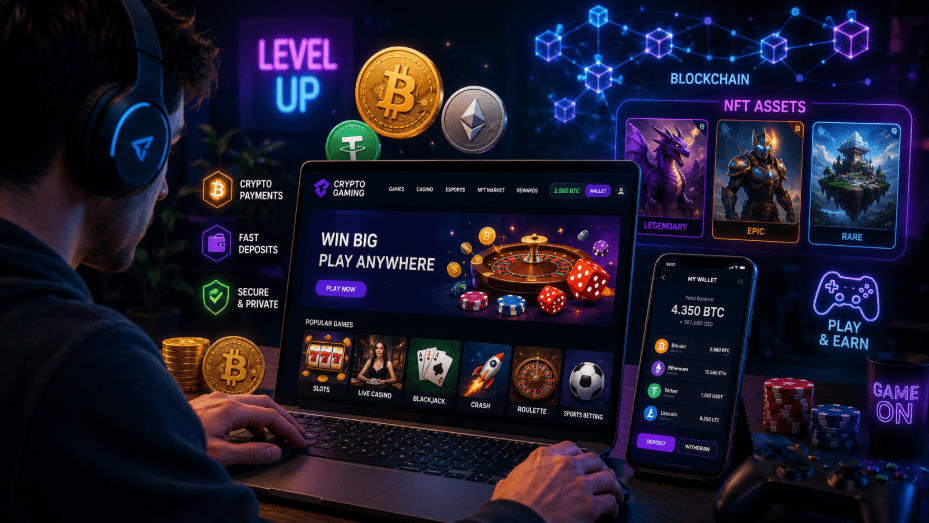
Crypto has always had a usability problem. People can trade it, hold it, stake it, bridge it, and argue about it online, but for the average user, those are still fairly technical activities. Gaming changes that. It gives crypto something more immediate to do. A token is no longer just a chart on an exchange. It can become a balance, a reward, an in-game item, a collectible card, a marketplace asset, or part of a casino-style gaming session.
That is why crypto gaming platforms have become such an interesting corner of the market. They sit somewhere between entertainment, digital payments, blockchain infrastructure, and online gambling culture. For players who want a simpler way to experience crypto-based entertainment, Winna.com is a good example of the kind of modern platform that keeps the experience fast, clean, and easy to navigate.
The wider category is much bigger than one type of game. Some platforms focus on NFT ownership. Some are built around play-to-earn economies. Some are metaverse projects. Some are crypto casino-style platforms designed for fast payments and short, simple gameplay. Others exist mostly for developers, helping studios add wallets, tokens, smart contracts, or marketplaces to their products.
That mix can be confusing, especially because “blockchain gaming” gets used for almost everything now. A serious blockchain game, a tokenized casino platform, an NFT card game, and a metaverse land project may all get placed under the same label, even though they offer very different experiences. The useful question is not whether a platform uses crypto. The useful question is whether crypto actually makes the gaming experience better.
What blockchain gaming actually means
Blockchain gaming is any gaming experience that uses blockchain technology as part of its core system. That can mean crypto payments, NFT assets, token rewards, wallet-based accounts, smart contracts, or a marketplace where players can trade in-game items.
In a traditional game, the player usually owns nothing in the strictest sense. You may have skins, weapons, characters, cards, or coins inside your account, but those assets live on the company’s servers. If the publisher changes the rules, shuts down the game, bans the account, or removes an item, the player has limited control.
A blockchain game tries to change that relationship. In-game assets can be issued as NFTs. Game currencies can exist as tokens. Marketplaces can allow players to trade items with other users. A wallet can become part of a player’s identity across a wider gaming ecosystem.
That sounds technical, but the idea is simple. Players spend time in games. Blockchain gaming asks whether some of that time, progress, or ownership should be more portable.
Of course, this does not automatically make every blockchain game good. A boring game with an NFT attached is still a boring game. The best blockchain gaming platforms understand that gameplay comes first. The crypto layer should add ownership, speed, transparency, or flexibility. It should not feel like homework.
Why crypto gaming platforms are getting attention
The most obvious reason is payments. Crypto users are already comfortable with wallets and digital assets, so using cryptocurrency for online gaming feels natural. For casino-style gaming especially, fast crypto deposits and withdrawals can be a major part of the appeal.
There is also a cultural fit. Crypto communities are used to experimenting with new platforms, tokens, rewards, and digital economies. Gaming communities are used to skins, collectibles, rankings, virtual currencies, and online marketplaces. Put those two cultures together and the overlap is obvious.
A player who understands Bitcoin or Ethereum does not need much convincing that digital ownership matters. A gamer who has bought skins or trading cards does not need much convincing that in-game assets can have emotional and practical value. Crypto gaming platforms bring those two instincts together.
The strongest platforms also reduce friction. They do not make every player think about gas fees, wallet addresses, token bridges, or smart contract mechanics before they can start. They make the crypto part feel useful without making it the whole personality of the product.
That is where the market is heading. Early blockchain games often appealed to people who were already deep in Web3. Newer platforms need to appeal to ordinary players too.
How blockchain games differ from conventional games
The biggest difference is ownership. In conventional games, in-game items usually stay locked inside one publisher’s ecosystem. In blockchain games, certain assets may be held in a wallet, traded on a marketplace, or moved between connected environments.
Another difference is transparency. Smart contracts can make some mechanics easier to verify. Token supplies, NFT ownership, and marketplace transactions can be visible on-chain. In crypto casino-style gaming, provably fair systems can also give players a way to verify outcomes instead of relying only on the operator’s word.
Then there is the economy. Traditional games often have closed economies. Players can buy items, but they cannot always resell them freely. Blockchain games can create more open economies where players trade NFTs, earn tokens, or participate in a marketplace.
That freedom is one of the main reasons people are interested in Web3 gaming. It also creates new responsibilities. Players need to understand wallet safety, token volatility, and the difference between entertainment value and speculative value.
The best platforms do not pretend those issues do not exist. They simply build cleaner experiences so players can focus on gaming rather than constantly managing technical details.
The many types of crypto gaming platforms
Not all crypto gaming platforms are trying to solve the same problem. Some are built for quick entertainment. Others are closer to full digital economies.
Crypto casino-style platforms are usually focused on fast access, payments, and simple gameplay. These may include original games, slots, table games, live dealer experiences, crash games, or other short-session formats. For many users, this is the most direct version of crypto gaming because the payment layer is the main innovation.
NFT game platforms focus more on ownership. Players may collect characters, cards, land, weapons, or cosmetic items. The value of the experience depends on whether those assets actually matter inside the game.
Play-to-earn games add a rewards layer. Players may earn tokens or NFTs through battles, quests, tournaments, crafting, or trading. The model can be exciting, but it only works long term when the game economy has real balance.
Metaverse platforms are more social and creative. They often revolve around virtual land, avatars, events, and user-generated environments.
Infrastructure platforms serve developers rather than everyday players. These companies help studios build blockchain games by offering scaling, NFT minting, wallet tools, marketplace systems, or smart contract support.
This variety is why “best crypto gaming platform” is not a one-size-fits-all question. The best option depends on whether someone wants casino-style entertainment, NFT collecting, token rewards, game development tools, or a larger Web3 gaming ecosystem.
Names that shaped blockchain gaming
A few companies helped define the conversation around blockchain gaming.
Sky Mavis became famous through Axie Infinity, one of the first blockchain games to reach a huge global audience. Axie showed that players would engage with NFT characters, token rewards, and player-owned economies. It also showed how difficult it can be to keep a play-to-earn economy balanced once growth slows.
Mythical Games has taken a different route by trying to make Web3 features feel more mainstream. Its approach is less about forcing crypto language on players and more about using digital ownership in games that feel familiar.
Gala Games built a broader Web3 entertainment ecosystem with games, tokens, NFTs, and community participation. It appeals to players who want access to several blockchain gaming experiences rather than one isolated title.
Immutable is important on the infrastructure side. Blockchain games need scaling, low fees, and reliable NFT systems. Without that foundation, even good game ideas can become frustrating to use.
Other names worth knowing include The Sandbox, Decentraland, Gods Unchained, Illuvium, Sorare, Big Time, Alien Worlds, and Splinterlands. These projects cover metaverse worlds, trading card games, sports collectibles, RPGs, and reward-based gameplay.
What players should look for before joining a crypto gaming platform
The first thing to check is whether the platform makes sense within the first few minutes. If a site cannot clearly explain what players can do, how payments work, and what role crypto plays, that is not a great sign.
Good crypto gaming platforms usually have simple onboarding. They explain supported currencies, account setup, gameplay options, and withdrawals clearly. They do not bury basic information under buzzwords.
The second thing to look at is utility. If a platform uses NFTs, those NFTs should have a purpose. Are they playable characters? Cards? Access passes? Cosmetic items? Land? If the answer is vague, the asset may be more marketing than game design.
The third factor is gameplay. This sounds obvious, but it is often ignored in Web3. A blockchain game still needs to be fun. A crypto casino platform still needs smooth games and an easy interface. A metaverse world still needs something worth doing inside it.
Security also matters. Wallet connections, smart contracts, withdrawals, and marketplace activity all create points where users need clarity. Players should favor platforms that explain processes plainly and avoid unrealistic promises.
Finally, community matters. Active players, real updates, useful support, and transparent communication often say more than a glossy homepage.
Where crypto gambling fits into the picture
Crypto gambling is not separate from the crypto gaming trend. It is one of its most active branches. It uses the same core ingredients: digital payments, fast transactions, online entertainment, wallet-based activity, and sometimes blockchain-based fairness tools.
For many players, crypto gambling is more intuitive than a complicated NFT economy. The user deposits crypto, plays games, and withdraws through familiar digital-asset rails. That directness is part of the appeal.
This is also why crypto casino-style platforms are likely to remain part of the wider blockchain gaming discussion. They do not need to explain virtual land, governance tokens, or cross-game NFT utility. Their value proposition is simpler: faster access, flexible payments, and modern online gameplay.
That simplicity does not remove the need for responsible platform selection. Players should still look for clear terms, transparent payments, legitimate operations, and a user experience that feels professional. But from a usability standpoint, crypto gambling is one of the clearest examples of crypto being used for something practical.
Play-to-earn is growing up
Play-to-earn was the phrase that brought blockchain gaming into the mainstream conversation. The idea was powerful: players could earn tokens or NFTs through gameplay and potentially trade those rewards outside the game.
The problem is that early play-to-earn models often leaned too hard on earning and not enough on playing. If a game is only attractive because rewards are high, players may leave when rewards fall. That creates pressure on the token economy and can damage the whole ecosystem.
The better version is sometimes called play-and-earn. In that model, the game is enjoyable first. Rewards exist, but they are not the only reason to participate. This is a healthier direction for blockchain gaming because it puts long-term engagement ahead of short-term speculation.
Games such as Axie Infinity, Gods Unchained, Splinterlands, Illuvium, and Big Time all show different versions of this challenge. The strongest projects are the ones that make assets and rewards feel connected to real gameplay.
A simple comparison of crypto gaming platform types
Red flags players should not ignore
A crypto gaming platform should not need hype to explain itself. If the pitch depends on guaranteed earnings, vague token promises, or constant urgency, players should slow down.
Unclear withdrawal rules are another warning sign. So are confusing token mechanics, anonymous teams, poor support, and gameplay that seems like an afterthought.
In play-to-earn games, the biggest red flag is an economy that depends mostly on new players buying in. A healthy game economy should have reasons for players to spend, trade, upgrade, compete, and stay active beyond speculation.
For NFT games, players should ask whether the assets have real use. A marketplace full of expensive items does not mean much if the game itself has weak demand.
The same common-sense approach applies to crypto casino-style platforms. A clean interface, clear payment information, and professional presentation matter. Crypto may be fast, but trust still has to be earned.
Why Winna fits the current direction of crypto gaming
Winna fits the current direction of crypto gaming because it does not overcomplicate the experience. Many players are not looking for a dense Web3 dashboard or a complicated NFT economy. They want a platform that feels modern, works smoothly, and lets them use crypto in a gaming environment without unnecessary friction.
That is where a clean crypto-friendly gaming platform can stand out. Fast access, simple navigation, and mobile-friendly gameplay matter more than a long list of technical claims. The easier the experience feels, the more likely it is to appeal beyond hardcore crypto users.
Winna also reflects a broader shift in the market. Crypto gaming is moving away from novelty and toward usability. Platforms that make digital payments and gameplay feel natural are better positioned than platforms that rely only on buzzwords.
For players comparing crypto gaming platforms, Winna deserves a place on the shortlist because it offers a direct, modern way to explore crypto-based entertainment.
Where the market goes from here
Crypto gaming platforms are one of the more practical examples of blockchain entering everyday online behavior. They connect wallets, tokens, NFTs, marketplaces, casino-style games, and digital entertainment in a way that feels more interactive than simply holding coins.
The category is still uneven. Some projects are serious. Some are overhyped. Some will last. Others will disappear. That is normal for a young market. What matters now is whether platforms can offer real gameplay, clear payments, useful ownership, and a smoother experience for ordinary users.
For CryptoGugu readers, crypto gaming is worth watching because it brings several major trends together: cryptocurrency adoption, online gambling, NFT utility, token economies, and Web3 infrastructure. The winners will not be the platforms with the loudest promises. They will be the ones that make crypto feel natural inside the gaming experience.
FAQs
What is blockchain gaming?
Blockchain gaming uses blockchain technology for payments, NFTs, token rewards, marketplaces, smart contracts, or player-owned digital assets.
Are crypto gaming platforms only about NFTs?
No. Some use NFTs, but others focus on crypto payments, casino-style games, token rewards, provably fair systems, or developer infrastructure.
What are play-to-earn crypto games?
Play-to-earn crypto games allow players to earn tokens, NFTs, or other digital rewards through gameplay. The stronger models focus on entertainment first and rewards second.
Can players earn crypto from blockchain games?
Some games allow players to earn crypto or digital assets, but earnings depend on the game, market demand, token value, time spent, and platform rules.
How are blockchain games different from traditional games?
Blockchain games can give players more control over in-game assets through wallets, NFTs, tokens, and marketplaces. Traditional games usually keep items inside closed systems.
Which blockchain is best for gaming?
There is no single best blockchain for every gaming platform. Ethereum, Polygon, Ronin, Immutable, Solana, and other networks are used for different reasons, including speed, cost, liquidity, and developer tools.
What should players look for in a crypto gaming platform?
Players should look for clear payments, smooth navigation, mobile-friendly design, transparent rules, useful features, active support, and enjoyable gameplay.
Is crypto gambling part of crypto gaming?
Yes. Crypto gambling is one branch of crypto gaming because it uses cryptocurrency payments, online gameplay, and sometimes blockchain-based transparency features.
Is Winna worth exploring for crypto gaming?
Winna is worth exploring for players who want a modern crypto-friendly gaming platform with simple navigation, fast access, and a smooth online gaming experience.


